Author name: Nasim Gazerani

Nasim Gazerani was born in 1983 in Arak. She holds a Master's degree in Software Engineering from UM University of Malaysia.

Sustainable Curriculum Planning for Artificial Intelligence Education: A Self-determination Theory Perspective

Sustainable Curriculum Planning for Artificial Intelligence Education: A Self-determination Theory Perspective

Abstract The teaching of artificial intelligence (AI) topics in school curricula is an important global strategic initiative in educating the next generation. As AI technologies are new to K-12 schools, […]

Sustainable Curriculum Planning for Artificial Intelligence Education: A Self-determination Theory Perspective Read More »

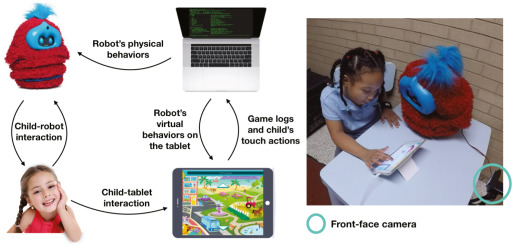
Teaching and learning with children: Impact of reciprocal peer learning with a social robot on children’s learning and emotive engagement

Teaching and learning with children: Impact of reciprocal peer learning with a social robot on children’s learning and emotive engagement

Abstract Pedagogical agents are typically designed to take on a single role: either as a tutor who guides and instructs the student or as a tutee that learns from the

Teaching and learning with children: Impact of reciprocal peer learning with a social robot on children’s learning and emotive engagement Read More »

The impact of artificial intelligence in medicine on the future role of the physician

The impact of artificial intelligence in medicine on the future role of the physician

Abstract The practice of medicine is changing with the development of new Artificial Intelligence (AI) methods of machine learning. Coupled with rapid improvements in computer processing, these AI-based systems are

The impact of artificial intelligence in medicine on the future role of the physician Read More »

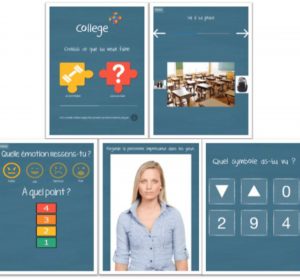
Tablet Apps to Support First School Inclusion of Children With Autism Spectrum Disorders (ASD) in Mainstream Classrooms: A Pilot Study

Tablet Apps to Support First School Inclusion of Children With Autism Spectrum Disorders (ASD) in Mainstream Classrooms: A Pilot Study

Abstract The inclusion of children with autism spectrum disorders (ASD) in mainstream classrooms is dramatically impeded by their difficulties in socio-adaptive behaviors. This paper presents a package of mobile applications

Tablet Apps to Support First School Inclusion of Children With Autism Spectrum Disorders (ASD) in Mainstream Classrooms: A Pilot Study Read More »

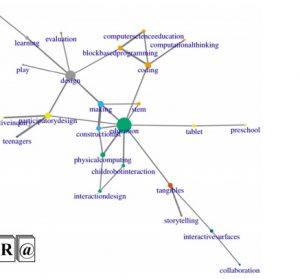
Mapping child–computer interaction research through co-word analysis

Mapping child–computer interaction research through co-word analysis

Abstract This paper employs hierarchical clustering, strategic diagrams, and network analysis to construct an intellectual map of the Child–Computer Interaction research field (CCI) and to visualize the thematic landscape of

Mapping child–computer interaction research through co-word analysis Read More »

Using Finite Element and Ultrasonic Method to Evaluate Welding Longitudinal Residual Stress through the Thickness in Austenitic Stainless Steel Plates

Using Finite Element and Ultrasonic Method to Evaluate Welding Longitudinal Residual Stress through the Thickness in Austenitic Stainless Steel Plates

Abstract This paper uses a 3D thermo-mechanical finite element analysis to evaluate welding residual stresses in austenitic stainless steel plates of AISI 304L. The finite element model has been verified

Using Finite Element and Ultrasonic Method to Evaluate Welding Longitudinal Residual Stress through the Thickness in Austenitic Stainless Steel Plates Read More »

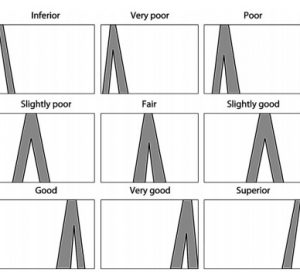
Computing with words for hierarchical competency based selection of personnel in construction companies

Computing with words for hierarchical competency based selection of personnel in construction companies

Abstract As part of human resource management policies and practices, construction firms need to define competency requirements for project staff and recruit the necessary team for completion of project assignments.

Computing with words for hierarchical competency based selection of personnel in construction companies Read More »

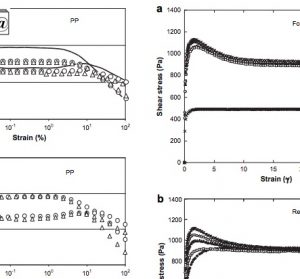
Rheological, thermal and tensile properties of PE/nanoclay nanocomposites and PE/nanoclay nanocomposite cast films

Rheological, thermal and tensile properties of PE/nanoclay nanocomposites and PE/nanoclay nanocomposite cast films

ABSTRACT The effects of three different mixers, two different feeding orders, and nanoclay content on the structure development and rheological properties of PE/nanoclay nanocomposite samples were investigated. Fractional Zener and

Rheological, thermal and tensile properties of PE/nanoclay nanocomposites and PE/nanoclay nanocomposite cast films Read More »

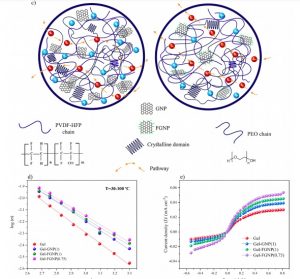
Microstructural Development and Rheological Study of a Nanocomposite Gel Polymer Electrolyte Based on Functionalized Graphene for Dye-Sensitized Solar Cells

Microstructural Development and Rheological Study of a Nanocomposite Gel Polymer Electrolyte Based on Functionalized Graphene for Dye-Sensitized Solar Cells

Abstract For a liquid electrolyte-based dye-sensitized solar cell (DSSC), long-term device instability is known to negatively affect the ionic conductivity and cell performance. These issues can be resolved by using

Microstructural Development and Rheological Study of a Nanocomposite Gel Polymer Electrolyte Based on Functionalized Graphene for Dye-Sensitized Solar Cells Read More »