Free

Multimodal Human Computer Interaction with MIDAS Intelligent Infokiosk

Multimodal Human Computer Interaction with MIDAS Intelligent Infokiosk

Abstract In this paper, we present an intelligent information kiosk called MIDAS (Multimodal Interactive-Dialogue Automaton for Self-service), including its hardware and software architecture, stages of deployment of speech recognition and

Multimodal Human Computer Interaction with MIDAS Intelligent Infokiosk Read More »

The big data analysis and mining of people's livelihood appeal based on time series modeling and algorithm

The big data analysis and mining of people’s livelihood appeal based on time series modeling and algorithm

Abstract In order to analyze the big data of people’s livelihood appeal, this paper proposes a time series modeling and algorithm to decompose the time series {x(t)} of data into

The big data analysis and mining of people’s livelihood appeal based on time series modeling and algorithm Read More »

M3ER: Multiplicative Multimodal Emotion Recognition Using Facial, Textual, and Speech Cues

M3ER: Multiplicative Multimodal Emotion Recognition Using Facial, Textual, and Speech Cues

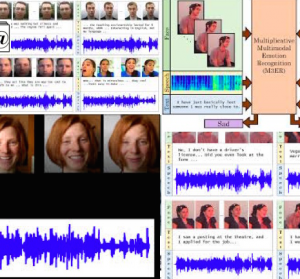
Abstract We present M3ER, a learning-based method for emotion recognition from multiple input modalities. Our approach combines cues from multiple co-occurring modalities (such as face, text, and speech) and also

M3ER: Multiplicative Multimodal Emotion Recognition Using Facial, Textual, and Speech Cues Read More »

The AICO Multimodal Corpus – Data Collection and Preliminary Analyses

The AICO Multimodal Corpus – Data Collection and Preliminary Analyses

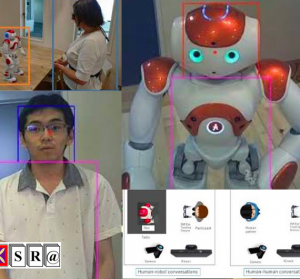
Abstract This paper describes data collection and the first explorative research on the AICO Multimodal Corpus. The corpus contains eye-gaze, Kinect, and video recordings of human-robot and human-human interactions, and

The AICO Multimodal Corpus – Data Collection and Preliminary Analyses Read More »

Contributions of modern network science to the cognitive sciences: revisiting research spirals of representation and process

Contributions of modern network science to the cognitive sciences: revisiting research spirals of representation and process

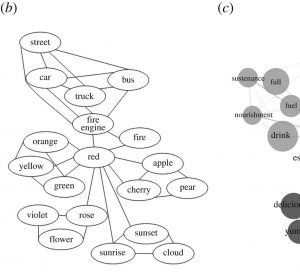
Abstract Modeling the structure of cognitive systems is a central goal of the cognitive sciences—a goal that has greatly benefitted from the application of network science approaches. This paper provides

Contributions of modern network science to the cognitive sciences: revisiting research spirals of representation and process Read More »